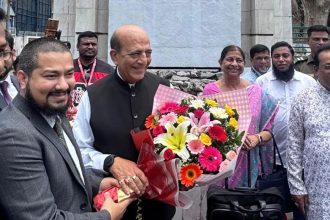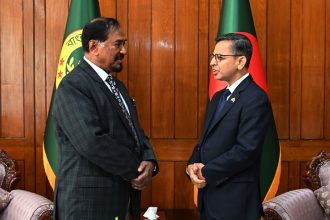

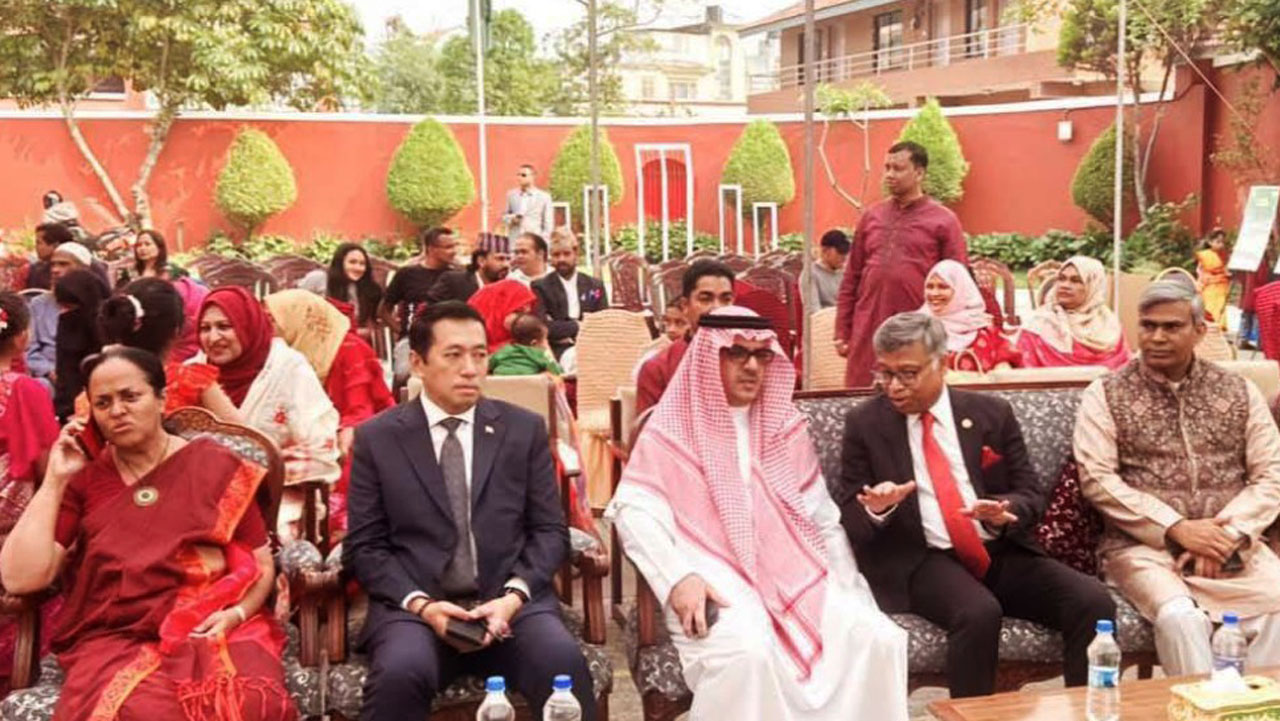
The Bangladesh Embassy in Kathmandu celebrated the Bengali New Year 1433 in a festive atmosphere on Friday at the embassy premises. Ambassadors and heads of missions of countries in the region and other countries, senior officials of the Nepalese government, diplomats of various missions in Kathmandu, prominent Nepalese business leaders, Bangladeshi community living in Nepal and their families participated in the event. The Secretary General of SAARC was present as the Guest of Honor at the event. The Pahela Boishakh celebration gained national and regional dimensions with the participation of ambassadors and representatives of various countries including India, Pakistan, Myanmar, Sri Lanka, Saudi Arabia, Egypt.

In his welcome speech, the Bangladeshi Ambassador highlighted the history of the origin and cultural heritage of Pahela Boishakh and said that this festival has become a universal festival of Bangladesh, which embodies the unique history, culture, heritage and tradition of the Bengali nation. He mentioned that this day returns to the social life of Bengalis with a call for ‘Halkhata’ and a new beginning for centuries. He said that this festival transcends religious, social and geographical boundaries and gives a vibrant expression to our ancient Bengali culture, customs and traditions. Noting that this festival is celebrated almost simultaneously in the vast region of South Asia and Southeast Asia, he said that this festival transcends national borders and strengthens cultural bonds, harmony, mutual understanding and friendship between different communities and nations.
In this context, he recalled the spiritual footwork ‘Charyapad’ composed by Buddhist monks in South Asia from the 6th to 12th centuries, which is identified as the oldest written evidence of the 1,000-year-old regional Bengali language and is part of the common cultural heritage of mankind. Referring to the civilizational connections emanating from the rich heritage and culture of Bangladesh and Nepal, the Ambassador said that this cultural feature has provided a solid foundation for cultural exchange and tourism cooperation in the bilateral relations.
In his speech as the Guest of Honour, the SAARC Secretary General praised the rich cultural heritage and culture of Bangladesh. He stressed the importance of regional cultural exchange in building closer ties among the peoples of South Asia. He termed the festival as a celebration of harmony and diversity in diversity.
The atmosphere of New Year was created in the embassy premises with special cultural performances of Nababarso and Pahela Baishakh songs. Along with Bengali songs, Nepali songs were also performed, reflecting the deep cultural ties between Bangladesh and Nepal. The guests enjoyed Bengali songs sung by eminent Nepali artiste Sabu Lama and students from local schools. Members of the Bangladeshi community also performed songs at the event. The joy of the festival was further enhanced by the participation of children in various games and prize distribution ceremonies.
The embassy premises were decorated with colourful festoons and traditional Bangladeshi items. Traditional Bangladeshi Nakshi Kantha, Jamdani and other saris were displayed during the event. Guests were served traditional food including Panta-Ilish, various types of pitha and sweets on the occasion of Pohela Baishakh.
The event highlighted the common cultural bond between the traditional solar calendar and New Year celebrations of Bangladesh and Nepal. It is worth noting that Pohela Baishakh in Bangladesh and Naya Barsh in Nepal are both celebrated in mid-April. It was a joint celebration of the common civilizational traditions and seasonal cycles of the region, which further strengthened the cultural ties between the two countries. The event concluded with a dinner featuring traditional Bangladeshi food.